Patient observed sterile treatment for birth control and other women’s health care
Risk to get HIV from birth control and other women’s health care
Birth control options that do not transmit HIV are condoms and daily pills. For all other options, there is some risk: In Southern Africa, you can estimate that 1 or more of 5 women treated before you had HIV infections. In Eastern Africa, you can estimate that 1 or more of 10 women before you have HIV. Options with potential exposure to contaminated instruments risks during insertion are intra-uterine devices and progestin implants; for these two options, if instruments are reused without sterilization after treating an HIV-infected woman, the next woman’s risk to get HIV may be estimated at 3% or less (similar to a sub-cutaneous or intramuscular injection). Tubal ligation (cutting the fallopian tubes) has higher risk; if instruments are reused with sterilization after treating an infected woman, the next woman’s risk to get HIV reach 10%-20%. Abortion carries a similarly high risk if instruments are reused without sterilization.
The risks with injectable options (Depo-Povera every three months or NET-EN [norethisterone enantate]) are repeated every 2-3 months, and so become greater than for the other birth control options. I do not further discuss injectable options because it is a risk to avoid unless you are sure your provider sterilizes instruments and what is injected cannot be contaminated (maybe from a pre-filled syringe). The menu on the right provides more information about Depo-Provera. Aside from the risk to get HIV from injections, Depo-Provera has other problems (see menu on the right).
POST for birth control and other women’s health care
| POST for birth control and other women’s health care |
| 1. Avoid skin-piercing procedures |
Consider birth control methods that involve little or no risk from reused instruments, such as condoms and oral hormone pills.
Avoid Depo-Provera and other injectables unless you are 100% confident injections are safe.
|
| 2. Use new disposable instruments |
If your provider cooperates: He or she can install an intrauterine device (IUD) with single use instruments. You can ask to them come out of new packages OR you can ask to buy and bring. You may also need to ask about syringes, needles, and vials of local anesthetic. |
| 3. You sterilize the instruments |
You can buy a metal speculum, which you keep and sterilize at home, and bring for your provider to use for vaginal exams. |
| 4. Ask providers how they sterilize instruments |
For some procedures (inserting hormone implants for birth control; tubal ligations to cut your fallopian tubes; and abortions) your provider will reuse instruments. If you are not confident your provider sterilizes instruments, can you look around for someone you trust? |
Additional information about women’s health care
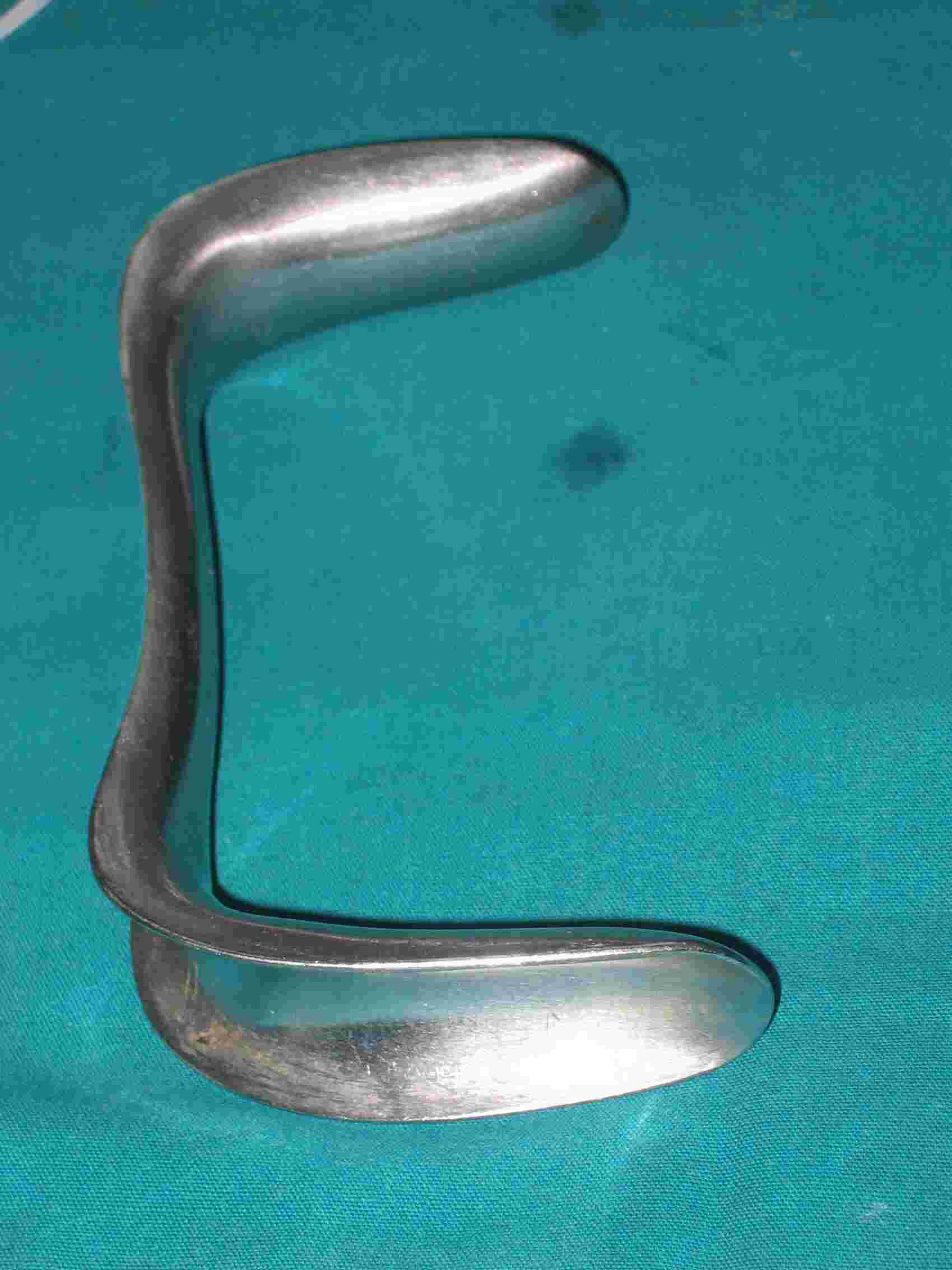
Vaginal exams: Vaginal exams are done on an outpatient basis to diagnose many diseases. Sometimes a speculum is used to examine the cervix. Reused metal specula should be sterilized in autoclaves or boiled. Surveys of health facilities in Kenya, Rwanda, and Tanzania during 2004-07 reported that only 1%-32% of specula used in vaginal exams were sterilized (see Service Provision Assessment Surveys). In surveys during 2001-04, sterile gloves were available in only 48%-67% of facilities offering maternal and child healthcare in Ghana, Kenya, and Rwanda (see Service Provision Assessment Surveys) . Healthcare staff who use gloves to protect themselves may not sterilize or discard them between patients.

Sim’s speculum
During vaginal exams, reused and unsterilized specula and plastic gloves as well as unwashed hands may transfer infections from one woman to others. For example, laboratory experiments have shown that herpes simplex virus (HSV) survives on plastic surfaces for several hours.[ii] [iii] The risk to transmit HIV transmission through vaginal exams is probably low because HIV infects relatively inefficiently through vaginal mucosa (skin).
Abortions: Although induced abortions are illegal across most of Africa, they are common. WHO estimated 4.2 million abortions annually (14 per 100 live births) in Africa around the year 2000, and 7.2 million annually (18 per 100 live births) in south-central Asia.[iv]
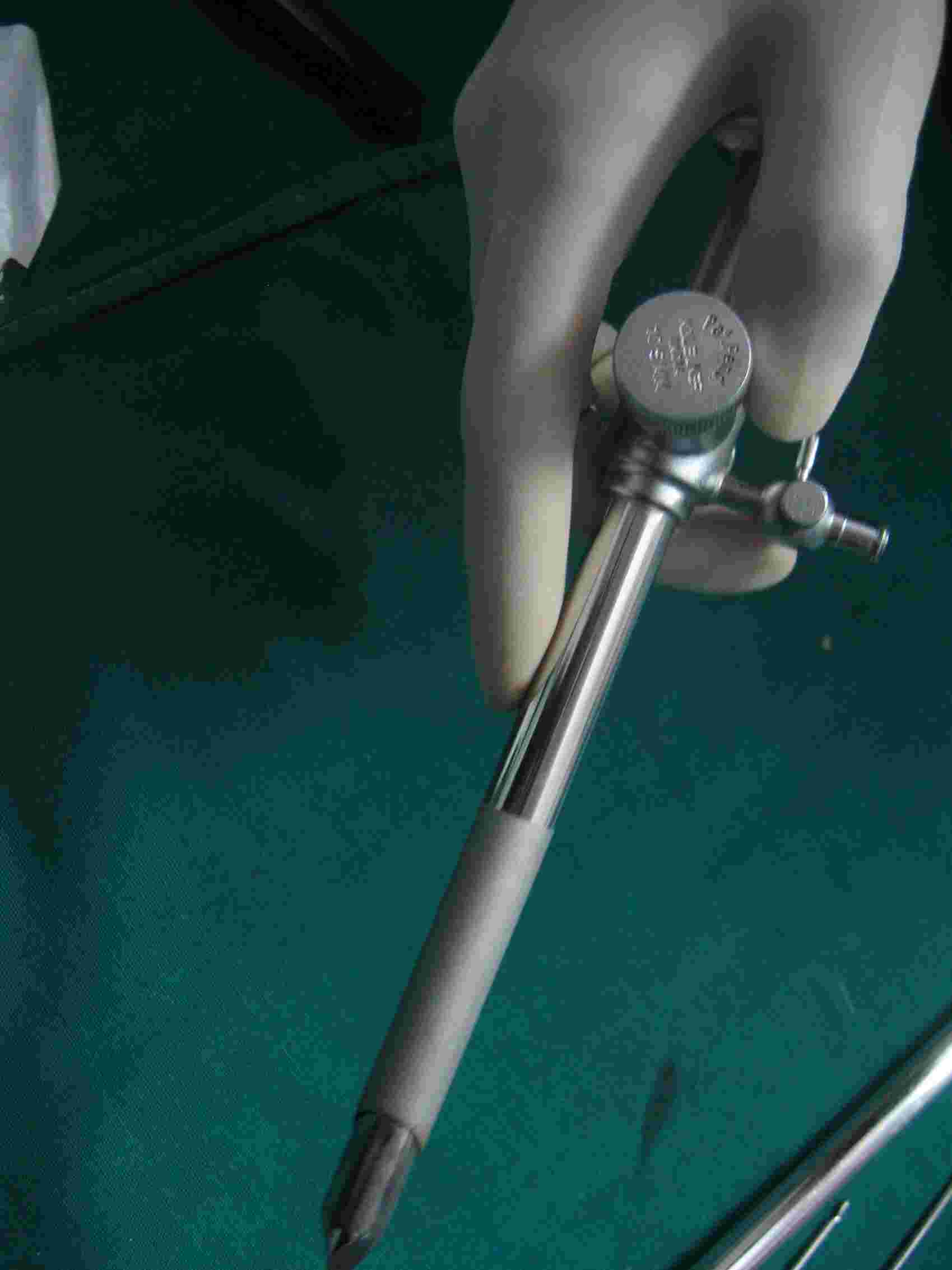
Tubal ligation: Tubal ligation is a surgery that cuts or blocks fallopian tubes to prevents eggs from ovaries getting to the uterus where they can be fertilized. This surgery is often done with a laparoscope and with local or general anesthesia.
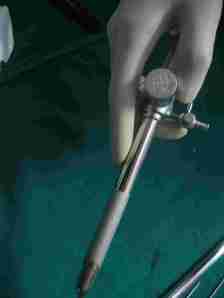
Laparoscope
 Bloodborne HIV: Don't Get Stuck!
Pingback: Hormonal Contraception and Increased HIV Transmission Risk « Don't Get Stuck With HIV
Pingback: Population Control Theory of Development is Fallacious and Dangerous « Don't Get Stuck With HIV
Pingback: Will Pathfinder’s Ethiopian Implanon Implant Project Be Safe? « Don't Get Stuck With HIV
Pingback: Further Questions About Implanon Birth Control Implants in Ethiopia « Don't Get Stuck With HIV