Estimated risk to transmit HIV
If the previous patient was HIV-positive and the provider reuses the needle and syringe, or even just the syringe, with no effort to clean, your chance to get HIV from a shallow injection (intramuscular or sub-cutaneous) may be estimated at 0.5%-3%. For an deeper injection (intravenous, or into a vein), the risk may be estimated at 3%-10%. Your risk may be much less if the syringe or needle are wiped or rinsed after use. Your risk may be greater if what is injected comes from a multi-dose vial.
POST can protect, but it’s not always doable…
The POST idea promoted on this web-site grew out of recommendations from the Safe Injection Global Network (SIGN). After a 1999 paper in the Bulletin of the World Health Organization estimated as many as 100,000 HIV infections per year in Africa from unsafe injections, the WHO with support from the US CDC and others established SIGN. SIGN recommended shifting injections from reusable glass syringes to single-use plastic syringes along with messages to the public to generate patient demand for single-use syringes. Using the POST idea to assess injection safety, national surveys in Africa and asked people (quote from page 481): “The last time you got an injection from a health worker, did he/she take the syringe and needle from a new, unopened package?”
However, there were and are slips between cup and lip. If providers follow CDC and WHO directions for how to give safe injections, it is difficult if not impossible for patients to see syringes and needles taken from sealed plastic packages in front of patients and that what is injected has been managed so it cannot have been contaminated. CDC recommends: “Prepare vaccines in a clean, designated medication area away from where the patient is being vaccinated…” . Also: “If multi-dose vials must be used for more than one patient, they should only be kept and accessed in a dedicated clean medication preparation area (e.g., nurses station), away from immediate patient treatment areas.” WHO recommends: “Injections should be prepared in a designated clean area where contamination by blood and body fluids is unlikely.”
In other words, SIGN’s recommendation to show patients that syringes and needles come from sealed bags is no longer the gold standard for safe injections. And SIGN never proposed any way for patients to see that what is injected has not been contaminated, ie, is from a single-dose or multi-dose vial opened in front of the patient. A workable POST strategy for injections would ask providers to give injections with pre-filled syringes taken from packages in front of patients. But that’s not yet on the agenda…
| POST for injections |
| 1. Avoid skin-piercing procedures |
When your doctor prescribes an injection, ask if you can get along without any medicine, or if an oral alternative is available. Many conditions, such as colds, flu, dry cough, and diarrhoea are often better treated without injected medicines.
The following drugs and other substances can be taken orally, and should be injected only in rare situations (especially if someone is unconscious, or vomits so much that oral medication will not stay down):
- vitamins
- glucose
- paracetamol and other drugs to reduce temperature
- most pain-killers
- treatments to stop diarrhea or vomiting
- medicines to treat asthma
- antibiotics (with a few exceptions, such as penicillin)
Most sexually transmitted disease (STD) can be treated with oral drugs. The most common exception is syphilis, which is often treated with injected penicillin. One injection of long-acting penicillin is safer than 7-10 daily injections of short-acting penicillin. (Old syphilis infections may require repeated injections of long-acting penicillin.)
|
| 2. Use new disposable instruments |
If your provider agrees: Ask him or her to take a new disposable syringe and needle from a sealed package OR if you can buy and bring a new syringe and needle in a sealed package.
If your provider agrees: Ask him or her to take medication to inject from a single-dose vial (a small bottle with medicine for one injection only) or multi-dose vial (in many countries, vaccines are available only in multi-dose vials). In many countries you can buy and bring most medications except vaccines.
Many providers stock only multi-dose vials (with medicine for many injections). You can ask your provider to write a prescription for a single-dose vial, which you can buy at a pharmacy. If no single-dose vial is available, ask your provider to take medicine from a new multi-dose vial opened in front of you. This is especially important for local anaesthetics. (Exception: If your provider uses a new syringe and needle every time he or she takes medicine from a multi-dose vial, there is no chance for blood or HIV to get into the vial. Can you be sure?)(c) Another option is to take injections from pre-filled disposable syringes– which are disposable syringes combined with single-dose vials, or single dose cartidges.
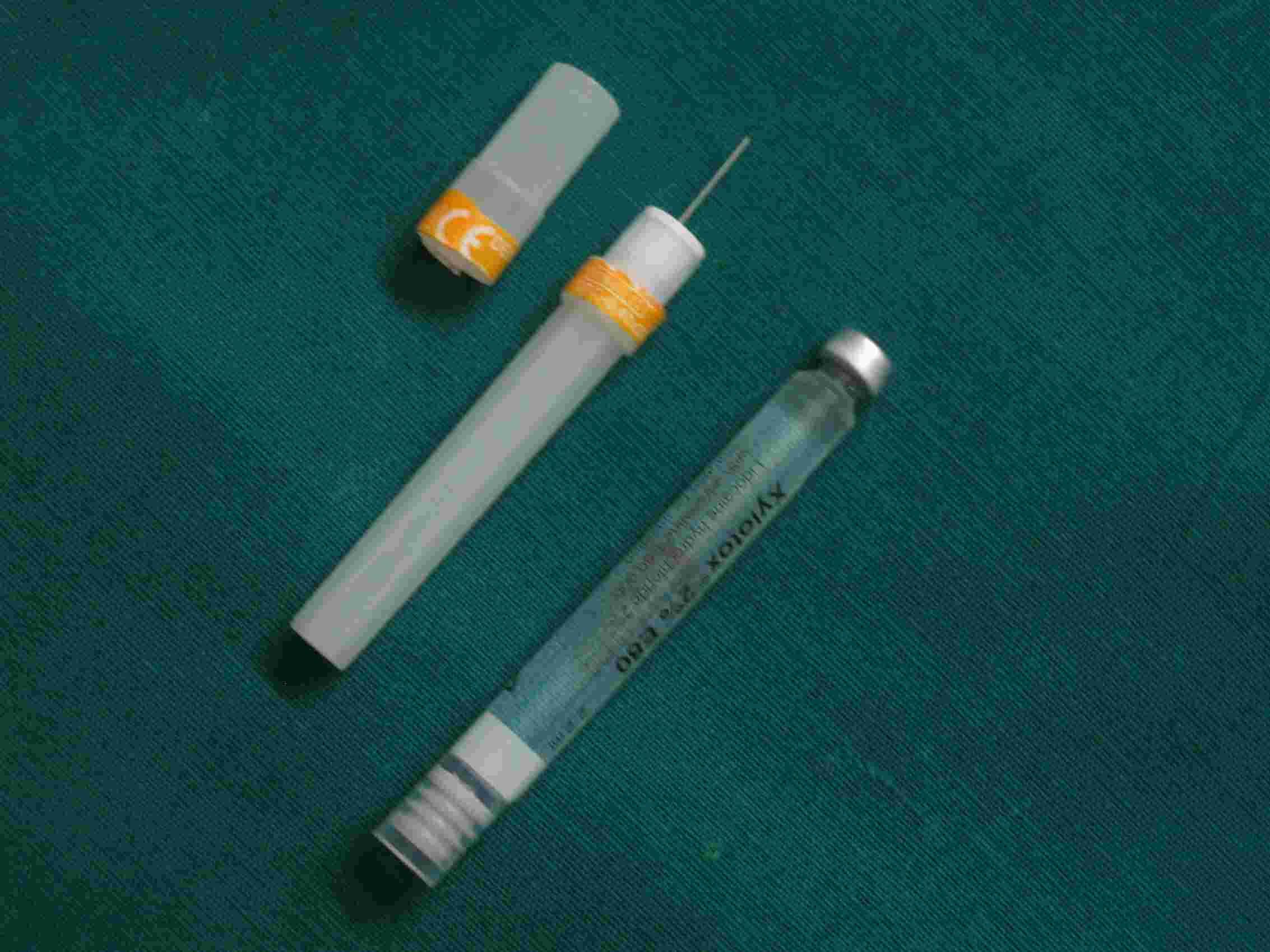
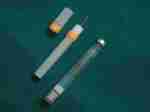 Single dose cartidge NOT YET AVAILABLE: To make POST work for injections, what is injected should be available in prefilled single-use syringes, which can be taken from packages in front of patients. In the future, several options might be small plastic bulbs with medicines connected to small needles (uniject or apiject syringes) or pre-filled conventional syringes.
|
| 3. You sterilize the instruments |
It’s safer not to do this. If you keep reused syringes and needles at home, even if you boil them after use, it’s easy for them to pick up germs from hands, cloth, and air. |
| 4. Ask providers how they sterilize instruments |
Your provider will have to use special reusable syringes and needles in some situations, such as to inject rabies vaccine. These are situations where you can talk with your provider, but in the end you have to trust them. |
Assessing SIGN’s impact after 25 years
SIGN won a lot of battles: Combining information from more than 20 surveys across Africa during 2011-15, 96.7% of those who reported a recent medical injection said the syringe and needle came from a newly opened package. No doubt a lot has changed. No doubt shifting to plastic syringes has curtailed reuse of contaminated syringes. But how much has changed? The very high percentages of patients who said they saw providers taking syringes and needles from sealed packages seeming conflicts with recommendations for how to give safe injections.
SIGN has not won the war: Unexplained infections have continued on a large scale in sub-Saharan Africa. If the war is to stop transmission through medical procedures, the war is not won; not by a long shot. SIGN started off on the wrong foot — proposing a cure (shifting from reusable to single-use syringes) without a diagnosis. A diagnosis, both then and now, requires outbreak investigations to trace unexplained infections to their source. Maybe injections are involved at times; if so, what are the specific errors that allowed blood transfer? How much comes from other medical procedures or cosmetic procedures. The war is not won. To do so, communities and governments must identify specific targets, specific errors to fix.
Evidence that medical injections infected people with HIV
One of the best ways to estimate risks to get HIV from injections is to follow people who are HIV-negative, testing them periodically and asking everyone about risks between tests. Information on new HIV infections in adults with or without injections between tests is available from 10 such studies in Africa during 1984-2008. Taking all studies together, 12 of 13 results show that men and/or women who reported injections were more likely, often many times more likely, to show up with a new HIV infection compared to those who reported no injections (see the column on the right in the Table, below).
| Country, year of study |
Population |
Relative risk to get HIV in people with recent injections vs. people with no recent injections |
| DRC, 1984-86[xiv] |
Healthcare workers |
1.5 |
| Uganda, 1989-90[xv] |
Adults |
1.1 |
| Rwanda, 1989-93[xvi] |
Women |
2.4 |
| Uganda, 1990-97[xvii] |
Men |
5.2* |
| Women |
1.6* |
| Uganda, 1990-2005[xviii] |
Adults |
8.5* |
| Tanzania, 1991-94[xix][xx] |
Men |
1.7 |
| Women |
1.4 |
| Uganda, 1997-99[xxi] |
Adults |
1.04 |
| Zimbabwe, 1999-03[xxii] |
Men |
<1 |
| Women |
1.3 |
| Malawi, 2003-2005[xxiii][xxiv] |
Women |
10.4^ |
| Tanzania, 2004-08 [xxv] |
Women |
3.09 for injections outside study clinic
1.67 for injections by study clinic
|
*These statistics are odds ratios from case-control studies. ^This result is based on reported hormone injections for birth control.
Additional information on injections
Reused syringes are dangerous, even with new needles: When someone receives an injection, some of their blood can get into the needle and syringe through back pressure from their muscle and through suction when the needle is withdrawn from their flesh at the end of an injection.
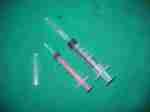
Disposable syringe and needle
If a provider then changes the needle to reuse the syringe with a new needle, blood in the old needle can get to the tip of the syringe through suction when the needle is removed from the nozzle of the syringe. There is good evidence for this: In an experiment more than 50 years ago, researchers filled syringes with sterile solution, injected some of the solution into mice with a deadly infection, changed the needles, and then with the same syringes injected the remaining fluid into healthy mice. Within two days, infections from these injections killed more than 70% of the formerly healthy mice.[iv]
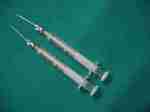
Glass syringe and needle
Many providers do not know this is dangerous. For example, 91% of health care staff in Ethiopia[v] in 2003-04 thought an injection was safe if the provider changed the needle but reused the syringe. A study of immunization injections in Swaziland in 1997 found that health staff in 8 of 26 clinics changed needles while reusing syringes.[vi] In 1987 WHO warned, “A dangerous practice has slipped into common use…: changing needles but using the same syringe for several consecutive injections.”[vii]
Multi-dose vials: Most injected vaccines and drugs come from multi-dose vials (small bottles that contain doses for many injections). Medicines in multi-dose vials may be contaminated with HIV or other pathogens. This can happen if a provider reuses a syringe – even with a new needle – to withdraw medicine from a vial. If HIV gets into the vial, it could survive for weeks, waiting to get into other patients. Multi-dose vials of local anaesthetic are especially dangerous. After an initial injection of local anaesthetic, some patients continue to feel pain. In such cases, providers might re-use the same syringe to withdraw another dose of anaesthetic for a second injection; this could contaminate the vial.
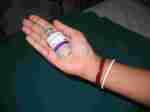
Multi-dose vial
Multi-dose vials have spread hepatitis B and C viruses in the US. In Australia, a multi-dose vial of local anaesthetic is suspected to have passed HIV from one HIV-positive patient to four others visiting a doctor’s clinic in one day.[xi]
Depending on the drug and vaccine, you can often but not always find single-dose vials available in your country. But for some medicines or vaccines, it may be difficult or impossible for you to avoid multi-dose vials.
Some injection providers routinely leave a needle embedded in the cap of a multi-dose vial. This is an added risk, because the needle provides a pathway for pathogens from the air or from hands or anything else that touches the needle to get into the vial.
Some medicines come in dried or concentrated form, and must be mixed with distilled water before injecting. The distilled water usually comes from a large bottle used to mix other medicines. Think of this large bottle as a multi-dose vial that can be contaminated; you can ask the provider to take saline water from a small or new bottle.
Are untrained providers a risk? Many people give injections – not only doctors and nurses, but also pharmacists, traditional healers, family, and friends. No general statements can be made about who gives safe injections. If a trained provider respects your requests, uses a new syringe and needle, and takes medicine from a single-dose vial, you are probably safer with the trained provider. But if the trained provider will not do so, you may be safer with an untrained provider who will listen to you.
Long-standing syringe and/or needle reuse in Africa: Reuse of syringes and/or needles has been a long-standing problem, going back to colonial times. During 1995-98, WHO surveyed injection practices in 13 African countries. A summary of findings from these surveys concluded that “the study countries have not made any progress with regard to safety over the last 10 years.” [viii] In 1999 WHO estimated that 50% of injections in Africa reused syringes and/or needles without sterilization.[ix] Despite improvements over the last 10-15 years, unsafe injections remain all too common. In 2002, WHO estimated that 17-19 percent of injections in Africa reused syringes and/or needles without sterilization.[x] In 1999, WHO established a Steering Committee on Immunization Safety. The Committee’s first report recognized that “up to one-third of immunization injections are not carried out in a way that guarantees sterility.”[xii]
References
[i] Gumodoka B, Vos J, Berege ZA, van Asten HA, Dolmans WM, Borgdorff MW. Injection practices in Mwanza region,Tanzania: prescriptions, patient demand and sterility. Trop Med Int Health 1996;1:874–880.[ii] Ferry B. Risk factors related to HIV transmission: Sexually transmitted diseases, alcohol consumption and medically-related injections. In Cleland J, Ferry B (eds). Sexual Behaviour and AIDS in the Developing World. Geneva: WHO, 1995. pp. 193-207.
[iii] Hauri AM, Armstrong GL, Hutin YJF. The global burden of disease attributable to contaminated injections given in health care settings. Int J STD AIDS 2004; 15: 7-16.
[iv] Evans RJ, Spooner ETC. A possible mode of transfer of infection by syringes used for mass inoculation. Brit Med J 1950; 2: 185-188.
[v] W/Gebriel Y. Assessment of the safety of injections and related medical practices in health institutions at Sidama Zone, SNNPRS, Thesis for the degree of Master of Public Health. Addis Abbaba: Addis Ababa University, 2004.
[vi] Daly AD, Nxumalo MP, Biellik RJ. An assessment of safe injection practices in health facilities in Swaziland. S Afr Med J 2004; 94: 194-7.
[vii] Expanded programme on immunization: changing needles but not the syringe: an unsafe practice. Wkly Epidemiol Rec 1987; 62: 345-346.
[viii] Quoted from p.166 in: Dicko M, Oni A-QO, Ganivet S, et al. Safety of immunization injections in Africa: Not simply a problem of logistics. Bull WHO 2000; 78: 163-9. p.166.
[ix] Kane A, Lloyd J, Zaffran M, Kane M, Simonsen L. Transmission of hepatitis B, hepatitis C, and human immunodeficiency viruses through unsafe injections in the developing world: model-based regional estimates. WHO Bull 1999;77:810–817.
[x] Hauri AM, Armstrong GL, Hutin YJF. The global burden of disease attributable to contaminated injections given in health care settings. Int J STD AIDS 2004; 15: 7-16.
[xi] Shields JW. Patient-to-patient transmission of HIV. Lancet 1994; 343: 415.
[xii] WHO. Report of the first meeting of the Steering Committee on Immunization Safety, Geneva, 25-26 October 1999. Doc. no.: WHO/V&B/00.17. Geneva: WHO, 2000.
[xiii] Star Syringe. ADs only please: Uganda ban on standard syringes comes into force. Available at: http://www.starsyringe.com/news.html (accessed 7 April 2009).
[xiv] N’Galy B, Ryder RW, Bila K, et al. Human immunodeficiency virus infection among employees in an African hospital. N Eng J Med 1988; 319: 1123-7.
[xv] Wawer MJ, Sewankambo NK, Berkley S, et al. Incidence of HIV-1 infection in a rural region of Uganda. BMJ 1994; 308: 171-3.
[xvi] Bulterys M, Chao A, Habimana P, et al. Incident HIV-1 infection in a cohort of young women in Butare, Rwanda. AIDS 1994; 8: 1585-91.
[xvii] Quigley MA, Morgan D, Malamba SS, et al. Case-control study of risk factors for incident HIV infection in rural Uganda. J Acquir Immune Defic Syndrome 2000; 23: 418-25.
[xviii] Whitworth JA, Birao S, Shafer LA, et al. HIV incidence and recent injections among adults in rural southwestern Uganda. AIDS 2007; 21: 1056-8.
[xix] Todd J, Grosskurth H, Changalucha J, et al. Risk factors influencing HIV infection incidence in a rural African population: A nested case-control study. J Infect Dis 2006; 193: 458-66.
[xx] Gisselquist D. New information on the risks of HIV transmission in Mwanza, Tanzania [letter]. J Infect Dis 2006; 194: 536-7.
[xxi] Kiwanuka N, Gray RH, Serwadda D, et al. The incidence of HIV-1 associated with injections and transfusions in a prospective cohort, Rakai, Uganda. AIDS 2004; 18: 342-4.
[xxii] Lopman BA, Garnett GP, Mason PR, et al. Individual level injection history: A lack of association with HIV incidence in rural Zimbabwe. PLoS Med 2005; 2: 142-6.
[xxiii] Kumwenda NI, Kumwenda J, Kafuafula G, et al. HIV-1 incidence among women of reproductive age in Malawi. Int J STD AIDS 2008; 19: 339-341.
[xxiv] Kumwenda JJ, Makanani B, Taulo F, et al. Natural history and risk factors associated with early and established HIV type 1 infection among reproductive-age women in Malawi. Clin Infect Dis 2008; 46: 1913-1920.
[xxv] Watson-Jones D, Baisley K, Weiss HA, et al. Risk factors for HIV incidence in women participating in an HSV suppressive treatment trial in Tanzania. AIDS 2009; 23: 415-422. Available at: https://www.ncbi.nlm.nih.gov/pmc/articles/PMC3223401/ (accessed 13 January 2019).


 Bloodborne HIV: Don't Get Stuck!
Pingback: Welcome to the Don’t Get Stuck With HIV blog and website « Don't Get Stuck With HIV
Pingback: Don't Get Stuck With HIV
Pingback: HIV Contaminated Blood in Africa: Unlikely? Undiscovered? Unreported? « Don't Get Stuck With HIV
Pingback: Hormonal Contraception and Increased HIV Transmission Risk « Don't Get Stuck With HIV
Pingback: Is Depo Provera Only Recommended for Poor and Non-White People? « Don't Get Stuck With HIV
Pingback: Muddy Waters Surrounding the Use of Injectable Depo Provera « Don't Get Stuck With HIV
Pingback: Extent of Unsafe Medical Injections in Resource Poor Settings Unknown « Don't Get Stuck With HIV
Pingback: Lessons from North American outbreaks – changing needles alone is not enough « Don't Get Stuck With HIV
Pingback: Risk of Blood-borne Viruses from Skin-piercing Beauty Treatments | Don't Get Stuck With HIV
Pingback: Risk of Blood-borne Viruses from Skin-piercing Beauty Treatments | Blogtivist