Bloodborne HIV: Don't Get Stuck!

Protect yourself from bloodborne HIV during healthcare and cosmetic services

Category Archives: blood

Revised History of HIV in Kenya – Part I


[Note about tree graphs/maps/diagrams/charts used in this blog post: the best way to understand them is to try them out on Google Charts. They must be called ‘tree’ graphs because the data they display can also be represented in a tree diagram or organizational chart, in other words, hierarchical data. I think of them as Mondrian graphs, but they have already been named!]

It’s over five years since I wrote a Short History of HIV in Kenya and I have read, written and thought a lot more about the subject than I needed to then for my MA dissertation. So it’s time I updated things a bit, even though a thorough history would be an entire book. Sorry this history is quick and dirty, I don’t have time to do it the justice it deserves. If anyone needs links for any particular claim they will have to get in touch. I’ll try to supply them here at a later date. This is Part I, with Part II coming as soon as I can get around to it.

The history of Kenya’s HIV epidemic is very different from those of southern African countries, such as Swaziland, Lesotho, South Africa and Botswana, where prevalence is several times that found in East African countries, and where political, social, economic, demographic, industrial, environmental, infrastructural and other factors also differ greatly. Kenya’s epidemic history also differs from those of Namibia, Zambia, Zimbabwe, Mozambique and Malawi. All those southern African countries form the southern African HIV region, with the highest prevalence countries in the world.

Kenya is part of a different HIV region, the east African region, where national prevalence figures are usually below 10%. It just happens to coincide with East Africa as well! Epidemics in the East African region are older than those in the southern region, but they are not as old as those in the west central HIV region. Phylogenetic analysis shows that HIV probably originated in Southern Cameroon in the early 20th century and spent a long time in and around Kinshasa, in DRC. Various HIV (Type 1, Group M) subtypes emerged and some spread to other countries. For example, subtypes A and D, we are told, spread to East Africa in the 1950s and 1960s, respectively, and are still the dominant subtypes there.

Subtype C spread to southern Africa in the 1970s to completely dominate all the southern region epidemics (and Rwanda, although other evidence suggests the epidemic there is older than those in southern Africa, and therefore ‘eastern’). There is very little genetic diversity in the southern region, so the epidemic there is said to be newer than others. In East Africa there is a bit more diversity than in the southern region. But the greatest diversity is found in west central countries, Democratic Republic of Congo, Republic of Congo, Angola, Gabon, Cameroon, etc. There are also distinct West African and North African HIV regions, but I shall limit myself to the East and southern African ones, as I haven’t had the opportunity to study the remaining regions in much detail yet. Suffice to say, prevalence is lowest in North Africa, higher in West Africa and the west central region, higher still in East Africa and highest in southern Africa.

The following tree graph of prevalence in 14 East and southern African countries (percentage of HIV positive people aged 15-49) shows how much variation there is, ranging from less than 5% to over 20%. But all the highest prevalence countries are in the southern region (which makes some people wonder why some of the biggest countries by HIV funding are in East Africa and places other than southern Africa).

Focus countries prevalence tree graph

This can be compared to a tree graph of the numbers of people living with HIV (PLH) in each country, which also shows a lot of variation. In both graphs the two separate regions are very clear, with prevalence of over 10% in all the southern African countries and over 20% in three of them, and less than 10% in all the East African countries in the prevalence graph. However the graph for PLH shows that South Africa has the biggest epidemic, in fact, the biggest in the world, with over 6 million people living with HIV, more than in the whole of East Africa. It is of note that some of the countries with the highest prevalence have small populations (such as Swaziland, Botswana and Lesotho), and therefore relatively small numbers of PLH. If this graph were to include all countries by PLH, many of the countries below would be squeezed out, with Nigeria, India, the US and several others contributing more than the East Africa region.

Focus countries PLH tree graph

These are huge generalizations, and here’s another one: HIV has been around for a long time, perhaps a hundred years, and it must have continued spreading from the epicenter (otherwise it would have died out). Sometimes the virus is depicted as a massive ‘explosion’ in the 1980s, but it had probably been spreading, albeit very slowly, in most countries in East and southern Africa for several decades before such explosive outbreaks occurred. Also, when they occurred, they did so in certain parts of countries; prevalence remained low in most parts of most countries, or else the period of very rapid increase occurred later. The tree graph of prevalence by county in Kenya (the percentage of people aged 15-49 infected with HIV), below, will have to serve as an example of a country with high levels of HIV in some areas but low levels in others (similar patterns are clear in many high prevalence countries, but not all).

Kenya prevalence tree graph

National prevalence is said to have peaked in the mid 1990s in Kenya, reaching a little over 10% before dropping at the end of the 90s and gradually settling at around half that figure in 2013. Prevalence in Uganda, in contrast, became high in the late 1980s to peak somewhere between 10 and 15% in the early 1990s. Therefore, Uganda’s epidemic is a bit older and a bit more severe than Kenya’s. This may be because Uganda is closer to the epicenter of the epidemic, but there are probably also other reasons. Distance from the epicenter alone does not determine the eventual severity of an epidemic (prevalence in most west central African countries is lower than in most East and all southern African countries, for example).

In Kenya death rates probably peaked in the early 2000s. So, working backwards, if prevalence peaked in the mid to late 1990s, incidence (the annual rate of new infections) must have peaked several years before. A peak in the number of new infections would give rise to a peak in death rates about 10 years later, that being the average time someone infected with HIV would survive before dying from some AIDS related illness (and I must emphasize, these figures are rough).

So far, this is about a time that predates mass treatment for HIV. Treatment means that many HIV positive people can live a long time, perhaps as long as HIV negative people. However, few people would have been receiving treatment in African countries before well into the 2000s. The picture of Kenya’s epidemic is still grainy, but it should be clear that HIV spread far and wide over a longer period of time than some accounts suggest, and is probably close to 50 years old in the country (maybe plus or minus 10 years). More importantly, the picture is grainy because national prevalence figures suggest a fairly evenly spread epidemic, with a large sector of the population infected in each administrative or political unit.

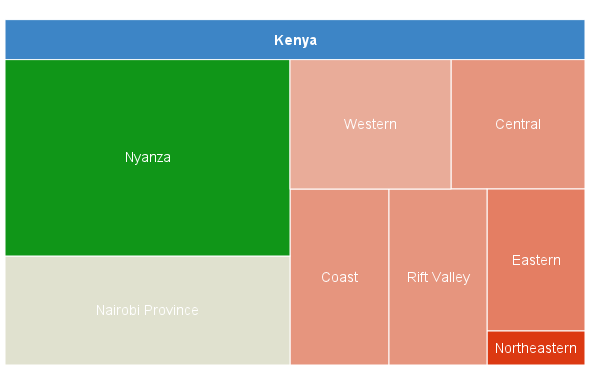
But figures used to create the graph above, released a few months ago, allow us to bring the picture into better focus in Kenya (hopefully). The country recently went through various political changes that have resulted in the generation of prevalence figures for 47 counties, instead of the 8 provinces, which is all that was available previously. A quick look at some of these figures show just how blurred the picture was, for so long! (The graph below is prevalence by Kenyan province, the percentage of people aged 15-49 infected with HIV. If you compare these provincial level figures with the provincial figures for 2003, they are almost identical.)

Kenya prev provinces tree graph


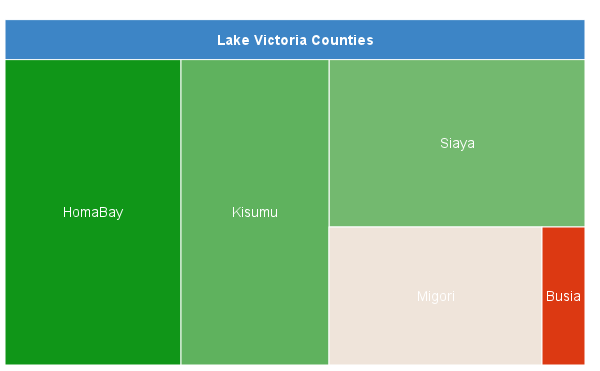
The last graph is of the five Kenyan counties that border with Lake Victoria. Four of them are in Nyanza province and the fifth is in Western province, on the border with Uganda. Prevalence in Nyanza has remained around 15% for many years, with the highest figures in Homa Bay, Kisumu, Siaya and Migori and low rates in Busia. This graph is of numbers of people living with HIV in each county. But there is quite a range, with over 140,000 in Homa Bay and only 16,000 in Busia. There are more PLHs in Homa Bay than in the whole of Burundi (90,000). Also, there are more HIV positive people in Kenya than there are people in Swaziland.

Lake Victoria Counties


Because more detailed figures are available now, but figures for earlier periods are hard to find, unreliable and not easy to compare with others, I’m starting the history at the end. How did an epidemic that began so far away, and such a long time ago, come to be as it appears now in Kenya? Prevalence in certain areas is lower than in some US cities. But in other areas it is as high as the three countries with ‘hyperendemic’ HIV, at well over 20% prevalence (Swaziland, Lesotho and Botswana).

The HIV industry that has developed around this lucrative disease continues to insist that the virus is transmitted almost entirely through heterosexual sex in African countries. This is despite the fact that it is mostly transmitted among men who have sex with men in the US (which has the highest number of people living with HIV outside of sub-Saharan Africa), injection drug being use a somewhat distant second mode of transmission in most western countries. Prevalence is low, even very low, among heterosexuals in most countries in the world, so why would it be high in certain parts of certain African countries? This is the central question for me. I believe that a history of the epidemic in Kenya will shed some light on how the virus infected, and continues to infect, so many people in some places and far fewer in others.

Lessons from three previous Ebola outbreaks


Newspapers, web, and TV have been delivering a crescendo of reports and comments on West Africa’s Ebola epidemic. A lot of what is available for public consumption scares people who are not at risk. At the same time, people at risk are not getting adequate advice from official sources to make informed decisions about how to protect themselves and their loved ones.

In this situation, it’s useful to take a look back at three well-studied and well-reported Ebola outbreaks: the first two recognized outbreaks in 1976 in Sudan and Zaire (currently Democratic Republic of the Congo) and a later outbreak in Kikwit, Zaire, in 1995. Official committees of experts studied each of these outbreaks and reported what they found in the Bulletin of the World Health Organization in 1978 and in the Journal of Infectious Diseases in 1999.

Nzara and Maridi, Sudan, 1976

The first recognized Ebola outbreak began in Southern Sudan in late June 1976 and ended in November 1976. A WHO/International Team coordinated a detailed and thorough investigation of the outbreak, reporting 284 cases and 151 deaths. Information and quotes in this and following paragraphs are from: Bulletin of the World Health Organization, 1978, pp 247-270, available at: http://whqlibdoc.who.int/bulletin/1978/Vol56-No2/ (accessed 2 August 2014).

The outbreak in Southern Sudan was traced to infections among workers at a cotton factory in Nzara town beginning in late June. The source of the virus is suspected to be bats or other animals living in the factory. During the outbreak, 9 factory workers got ill with Ebola (p 253); most subsequent infections came from household contact. “The outbreak in Nzara died out spontaneously” (p 254) after 31 deaths. Before the Nzara outbreak ended, cases from Nzara spread Ebola to two other communities, Tembura and Maridi. In Tembura, a woman from Nzara introduced Ebola that killed three close contacts; that was the end of it in Tembura. In Maridi, Ebola spread from two people from Nzara treated at Maridi’s hospital, which “served both as the focus and the amplifier of the infection” (p 252). Transmissions in Maridi lead to 116 deaths. Several patients from Maridi went for treatment in Juba, resulting in one additional infection and death among Juba’s hospital staff.

“The difference between the Nzara and the Maridi outbreaks is best exemplified by examining the focus where patients most probably became infected. Few patients (26%) were even hospitalized in Nzara, and they seldom stayed more than a few days, but in Maridi almost three-quarters of the patients were hospitalized, and often for more than two weeks. As a result, Maridi hospital was a common source of infection (46% of cases), whereas the Nzara hospital was not (3% of cases)…” (p 253).

A WHO/International Study Team arrived in Maridi towards the end of the epidemic and stayed to the end. The Study Team recruited surveillance teams to scout for cases in communities around Maridi. “A large number of cases of active infection were soon discovered; each was reported to the Sudanese officials and an ambulance accompanied by a Public Health Officer was sent to the house. Patients were persuaded to enter the isolation wards at the hospital” (p 250). Significantly, Public Health Officers did not force suspected cases to go to the hospital: “Some refused, and in these cases relatives were warned of the grave risks, and advised to restrict close contact with the patient, and to limit it to only one close relative or friend. Protective clothing was offered but usually refused.”

Yambuku, Zaire, 1976

The first recognized case reported symptoms on 1 September. The last death occurred just over two months later on 5 November 1976. An International Commission managed a detailed and thorough investigation of the outbreak, reporting 318 cases and 280 deaths. The information in this and following paragraphs is from the Bulletin of the World Health Organization, 1978, pp 271-293, available at: http://whqlibdoc.who.int/bulletin/1978/Vol56-No2/ (accessed 2 August 2014).

“The index case in this outbreak had onset of symptoms on 1 September 1976, five days after receiving an injection of chloroquine for presumptive malaria at the outpatient clinic at Yambuku Mission Hospital… [A]lmost all subsequent cases had either received injections at the hospital or had had close contact with another case. Most of these occurred during the first four weeks of the epidemic, after which time the hospital was closed, 11 of the 17 staff members having died of the disease…” (p 271).

“Five syringes and needles were issued to the nursing staff [at the Yambuku Mission Hospital] each morning for use at the outpatient department [with an average of 200-400 outpatients each day], the prenatal clinic, and the inpatient wards [with 120 beds]. These syringes and needles were apparently not sterilized between their use on different patients but rinsed in a pan of warm water. At the end of the day they were sometimes boiled” (p 273).

“The epidemic reached a peak during the fourth week, at which time the YMH [Yambuku Mission Hospital] was closed [on 3 October], then it receded over the next four weeks” (p 279). “[I]t seems likely that closure of YMH [Yambuku Mission Hospital] was the single event of greatest importance in the eventual termination of the outbreak” (p 280). The last recognized transmission occurred in late October.

The International Commission organized surveillance for cases in communities around Yambuku. “Suspect cases were not closely examined, but medicines were given to them and arrangements were made for their isolation in the village… [P]hysicians were sent to follow up suspect cases…” (p 276). Notably, surveillance teams did not force or even urge suspect cases to go to hospital. In any case, the outbreak in and near Yambuku had already died out on its own, with the last probable case dying on 5 November, four days before surveillance began on 9 November (p 277).

The International Commission collected and reported data on transmission from cases to family members. In 146 families with one or more cases acquired from outside the family, 1,103 family members were exposed, of which 62 (5.6%) got sick with Ebola (p 282). In other words, there was less than a 50% chance a case would infect a family member (146 cases, or more if any family had more than one case, infected a total of 62 family members). Thus, once the hospital closed, each case infected on average less than one family member, so the epidemic died out on its own.

Kikwit, Zaire, 1999

An International Scientific Commission investigated an Ebola outbreak in Kikwit, DRC, a large, sprawling town with a population reported at 200,000-400,000 at the time of the outbreak. The investigation identified 315 cases between 6 January and 16 July; out of 310 cases with adequate information, 250 died. Information in this and subsequent paragraphs is from a 1999 special issue of the Journal of Infectious Diseases, available at: http://jid.oxfordjournals.org/content/179/Supplement_1 (accessed 3 August).

During the Kikwit outbreak, 80% of case patients were hospitalized to treat their Ebola illness (page S82). However, hospitalization did not interrupt contacts between family members and case patients (p S88): “As in much of Africa, the families of inpatients are responsible for providing food and many other aspects of patient care, such as cleaning bedpans and washing soiled clothing and linens. Often family members arrange to sleep on the hospital ward [even sharing the patient’s bed; p S90] to assure continued care through the night.”

A study of secondary infections among 173 household members of 27 case patients found 28 secondary infections in 15 households (7 had >1 secondary case). “The exposure that was most strongly predictive of risk for secondary transmission was direct physical contact with the ill family member, either at home in the early phase of illness or during the hospitalization” (p S89). The 28 secondary cases occurred in 95 household members who had touched the case patient during early or late illness; whereas none of 78 household members who had not touched the patient at that time got sick, even though many slept in the same room, shared meals, or touched the patient before illness (p S89).

“There was an additional risk associated with a variety of exposures to patients in the terminal stages of illness, such as sharing a hospital bed or hospital meals and touching the cadaver” (p S90). “[T]he use of barrier precautions by household members and standard universal precautions in hospitals would have prevented the majority of infections and deaths…” (p S91).

During case surveillance in and around Kikwit town (p S78), “persons who met the case definition…were instructed to seek medical evaluation and possible hospitalization at Kikwit General Hospital…” However, this was not forced; if the sick person chose to stay home, family members “were educated on how to reduce their risk of infection…. Nurses previously trained in the sentinel clinics also visited household of probable case-patients to distribute protective materials (eg, a pair of gloves, soap, and wash basin) as needed and to reinforce educational messages about risks of transmission and symptoms suggesting disease in subsequent family members.” During surveillance outside Kikwit (p S78-S79), “Probable case-patients were confined in their households, instructions for care were given, and basic protective equipment was provided to the primary care givers.”

Lessons for West Africa, 2014

Based on reports from previous epidemics, here are several recommendations. The first is for people at risk to protect themselves. The second is for public health managers to deal with cases in a way that is acceptable to the community while at the same time ensuring transmission is too low to sustain the outbreak. Stopping the outbreak involves reducing the average transmission from each current case to less than one more case. Both recommendations contribute to that goal.

1. Recommendation to the public: If you are living in a community with Ebola cases, avoid injections, infusions, dental care, manicures, and all other skin-piercing procedures with instruments that might not have been sterilized after previous use. If you do this, and if you stay away from people with suspected Ebola infections, you have virtually no risk to get Ebola.

If someone stays away from sick people and funerals, the only remaining risk to get Ebola is through unrecognized contact with some unknown case. In previous epidemics, acquisition of Ebola from unrecognized contacts with unknown strangers has been confirmed through only one form of contact – blood-to-blood contact when health care workers reuse syringes and needles without sterilization to give injections to one patient after another. Reused, unsterilized skin-piercing equipment can pass Ebola from someone with the virus to complete strangers. If people in communities with Ebola avoid skin-piercing procedures – in hospitals, pharmacies, dental clinics, barbershops, beauty salons, from traditional healers, etc – the risk to get Ebola from some unknown source is near zero. Moreover, the public health risk – that people with Ebola will infect strangers not involved in patient care – will be too low to sustain the outbreak. (If you do go for an injection, manicure, or other skin-piercing procedure, you can ensure instruments used on you are sterile by following advice at: http://dontgetstuck.org/.)

2. Recommendation to public health managers: Accept and accommodate home-based care of suspected and even confirmed cases, if that is what the family wants.

For the sake of effective management of the epidemic, the challenge is to reduce transmission on average from each case to less than one more case. Based on reports from three well-studied outbreaks in 1976 and 1995, caring for an Ebola case at home results on average in less than one new case – that is enough to wind down the epidemic, which is a lot better than what has been achieved so far in West Africa in recent months.

If a suspected case with common symptoms (fever, diarrhea, sore throat) goes to the Ebola ward, what is the chance he or she does not have Ebola? If so, what is the chance he or she will get Ebola from another patient? Without good data showing near zero risk for patients to get Ebola in an Ebola ward, it is reasonable for people to fear and resist going there. And, because getting all cases into isolation wards is not necessary to stop the epidemic (see previous paragraph), there is no good public health excuse for using government coercion to force people to go. Can we expect parents willingly to send children with sore throats to isolation wards?

The risk to family care-givers is, nevertheless, substantial if the suspected case turns out to have Ebola. If families accept the risk, that’s their choice. However, that risk can be reduced by giving care-givers detailed advice about specific risks, providing protective gear, and advising in-house quarantine measures to protect family members and others.

In any case, forcing suspected cases to go to isolation wards is likely to undermine rather than enhance epidemic control. Consider: When people are afraid government will force them or their loved ones to go to an Ebola ward, they may hide sick family members (suspected cases), avoid public health personnel, and seek secret treatment from cooperative doctors or others who may or may not practice barrier nursing or sterilize instruments after use. Thus, the threat of force may well reduce, not enhance, the ability of public health managers to advise and to supervise treatment of cases to prevent onward transmission.

This recommendation to accommodate home-based care agrees with a recent decision by Sierra Leone’s President Ernest Bai Koroma to quarantine sick patients at home, a decision appreciated by Heinz Feldman at the US National Institute of Allergy and Infectious Diseases: “It could be helpful for the government to have powers to isolate and quarantine people and it’s certainly better than what’s been done so far…” See: West African outbreak tops 700 deaths, Associated Press 31 July 2014, available at: http://www.patriotledger.com/article/ZZ/20140731/NEWS/140739987/12662/NEWS (accessed 31 July 2014).

Risks the current outbreak will spread to other countries

Are people living in the US or UK or Australia at risk? No. Just as in Maridi, Sudan, in 1976, the risk is that a patient with Ebola acquired elsewhere will go to a hospital with poor infection control, and that the hospital will amplify the infection, spreading it into the community. This is not going to happen in Europe, the US, or most other countries because hospitals with adequate infection control will not amplify the outbreak.

However, there is a risk that Ebola from West Africa’s ongoing outbreak might spread to other countries in Africa. Wherever HIV, a slow-acting bloodborne virus, transmits through unsafe healthcare, there is a risk that Ebola, with an incubation period of weeks not years, will similarly spread through unsafe healthcare. Most countries in Africa have generalized HIV epidemics, with more women than men infected, and with only small minorities of infections explained by men having sex with men or people injecting illegal drugs. The public health community likes to blame Africa’s generalized epidemics on sex, but no one has been able to find sexual differences between Africa vs. Europe or the US that could explain Africa’s generalized HIV epidemics. What is different is that Africans get more exposures to reused but unsterilized skin-piercing instruments during health care and cosmetic services.

The existence of generalized HIV epidemics in a country is best explained by a lot of HIV transmission through unsafe health care along with some sexual transmission. The fear that Ebola from West Africa might spread to other countries is a realistic concern for countries with generalized HIV epidemics.

South Africa: Don’t Panic About Ebola, We Have Extremely Effective Surveillance Systems


Some may beg to differ with the health minister. While TB is very different from ebola, South Africans will (I hope) recall hearing about an epidemic of multidrug-resistant (MDR) and extensively drug resistant (XDR) TB being transmitted in health facilities in South Africa and surrounding countries, perhaps since the early 2000s. Scaremongering about infectious disease outbreaks doesn’t do anyone any good, but nor does underestimating the ease with which diseases can spread, within a country and internationally.

A three decade HIV pandemic has shown us that surveillance systems on their own are not enough. The XDR/MDR epidemic is very closely connected with the HIV epidemic in South Africa and has been attributed to poor infection control. Countries that wish to control disease spread need strong health systems. However, the reaction to HIV has not been a sustained strengthening of health systems as a whole, but rather a vertical, cherry-picking approach. The result is that most countries in sub-Saharan Africa now have crumbling health systems, massive shortages in skilled health personnel, inadequate equipment and unreliable vital supplies.

Conditions are so dangerous that UNAIDS advises UN personnel not to use health facilities in developing countries, although the institution seems to believe that the same facilities are fine for Africans. Guinea, Liberia and Sierra Leone have relatively low HIV prevalence, whereas the number of HIV positive people in Nigeria could be the second highest in the world; South Africa is home to the highest population of HIV positive people. This has only weakened health systems further.

Nor is there any need to single out South Africa, Nigeria or the three countries that have the worst ebola outbreaks so far. There are Service Provision Assessments and other reports for many African countries showing that basic supplies such as gloves, soap and water, drugs, even injecting and other equipment, are frequently lacking. There are also scores of articles alluding to dangerous conditions, some published many years ago.

The South African health minister, and health ministers in all African countries, would be better off using outbreaks of ebola, MDR and XDR TB, hepatitis and HIV as arguments for investing in health systems that can provide safe health services for everyone, rather than for the rich alone, or for those suffering from headline grabbing diseases. Nosocomial TB in South Africa is thought to have started more than ten years ago, and affects many health facilities, in several countries. Therefore, there have been numerous outbreaks over that period, not just a few isolated instances.

Many of the people who have died of ebola are health professionals and others who are probably more aware of the risks they face than their patients are. Claiming that health systems are fine and that they are able to cope is a betrayal of the work their health professionals are doing. Minister Dr Aaron Motsoaledi should tell the WHO and other international institutions something that is an open secret about healthcare safety in African countries – it is in very urgent need of attention.

Nigeria, Unsafe Healthcare and Bloodborne Virus Epidemics


An article in a Nigerian newspaper highlights the very serious hepatitis epidemic there, with an estimated 20 million people, about 12% of the population, infected with either hepatitis B (HBV) or C (HCV). Although one of the ways HBV can be transmitted, and the way HCV is usually transmitted, is through blood, it is less common to find explanations of why or how people come into contact with someone else’s blood, or how to avoid this.

The Don’t Get Stuck With HIV site gives details of numerous ways you can come into contact with someone else’s blood through healthcare, cosmetic and traditional practices. Healthcare practices include antenatal care, birth control injections and implants, transfusions, child delivery, dental care, donating blood, injections for curative and preventive reasons, catheters, male circumcision and others.

Cosmetic practices include manicures and pedicures, shaving, tattooing, body piercing, use of Botox and other products, performance enhancing drugs and perhaps colonic irrigation. Traditional practices include male and female genital cutting (FGM and MGM), traditional medicine, scarification and various other skin-piercing practices.

The Don’t Get Stuck with HIV site also lists some of the steps you can take to protect yourself from exposure to HIV, HBV, HCV or other bloodborne pathogens, even ebola. The site also links to articles and sources of data about unsafe healthcare, unexplained HIV infections and other indications that risks for bloodborne transmission of various viruses are not always so widely recognized.

As a result, people often don’t know there is a risk and they don’t know how to protect themselves. This is as true of HIV in high prevalence countries with inadequate health services, HBV and HCV in countries where those viruses are common, and even ebola or other haemorrhagic viruses, when such an outbreak occurs. Indeed, ebola epidemics have only occurred in countries where healthcare is known to be unsafe, such as Democratic Republic of Congo, Sudan, Uganda, Guinea, Sierra Leone, Liberia and most recently Nigeria.

Two lengthy reports on healthcare safety in Nigeria have been published in the last few years. The second was a survey using the WHO’s ‘Tool C’, also used for the survey from Philippines mentioned in a recent blog. Bearing in mind the warnings we are currently hearing about ebola, and the warnings we should have been hearing about HIV and hepatitis:

Of the health facilities observed, only 23 (28.8 percent) had soap and running water for cleansing hands, and no facility had alcohol-based hand rub available.

Overall, fewer than half of all injections observed were prepared on a clean surface…

They found that injection providers only washed their hands in 13 percent of cases; none used an alcohol-based hand rub…

Fewer than half of the providers were seen to use water or a clean wet swab to clean the skin before vaccination, therapeutic, and family planning injections…

For vaccination, in 79.7 percent of cases, auto-disable syringes were used.

However, for dental procedures, there were two observations where providers used sterilizable syringes, and of these two, one of them also used a sterilizable needle…

18.7 percent had a needle left in the diaphragm of a multi-dose vial.

When glass ampoules were used during vaccination, the providers used a clean barrier in 1 of the 11 vaccination injections observed. Providers used a clean barrier in the only such dental injection observed, 3 of 11 family planning injections, and 4 of 43 therapeutic injections observed (9.3 percent).

Providers generally used standard disposable needles and syringes (70 percent) for phlebotomy procedures, and lancets for procedures requiring lancing (78.6 percent). Providers were rarely seen to use safety devices such as auto-disable and retractable syringes…

62.6 percent of procedures were prepared on a clean, dedicated table or tray where contamination of the equipment with blood, body fluids, or dirty swabs was unlikely (in 42 out of 67 hospitals and 20 out of 32 lower-level facilities).

[for blood draws and intravenous procedures] Overall, providers washed their hands with soap and running water in only 2 of the 99 observations.

Data collectors observed that patients shared a bed or stretcher with another patient in 17.6 percent of IV infusions. This was also the case for 4.5 percent of IV injection patients.

Data collectors observed that in 69.3 percent of cases, the provider used a clean gauze pad and gently applied pressure to the puncture site to stop bleeding after the procedure.

Only 10.5 percent of providers cleaned their hands with soap and water or an alcohol-based hand rub following the observed procedures. In the 35 cases in which there was blood or body fluid contamination in the work area, the area was cleaned with disinfectant in 20 percent of observations (see Table 14).

During interviews, five percent of providers (11 out of 217) reported that they used sterilizable needles in injections, phlebotomies, IV injections, or infusions. Of the 5 out of 187 supervisors who reported use of sterilizable syringes and needles, three said that fuel was always available to run the sterilizer, while the remaining two reported that fuel had been unavailable for less than one month at some point.

Half of the 80 health facilities had infectious waste (non-sharps) outside of an appropriate container.”

This list includes only some of the risks to patients. There is also a section on risks to the provider, risks to other health staff, such as waste handlers, and risks to the community. Nigeria is unlikely to have the worst health facility conditions in Africa and there are many areas of healthcare safety requiring urgent attention.

When news reports about ebola constantly emphasize things like eating bushmeat and ‘traditional’ practices at funerals, think of the kind of conditions that can be found in Nigerian hospitals even when healthcare personnel are aware that an inspection is taking place. When reports about hepatitis concentrate on intravenous drug use and other illicit practices, and when reports about HIV seem to be almost entirely about sexual behavior, conditions in health and cosmetic facilities and contexts where traditional practices take place must also be relevant.

Seek and you shall Find: Evidence in Support of HIV Drug Sustainability


A recent piece of research claims to find that mass male circumcision programs do not result in ‘risk compensation’, the idea that some HIV interventions can result in an increase in ‘risky’ behavior, such as sex without condoms. Happily for those aggressively promoting mass male circumcision, they say they found no evidence of risk behavior. Whether they found evidence that it doesn’t occur, rather than failing to find evidence that it does occur, is another matter.

Similar research into the use of pre-exposure prophylaxis (PrEP), the use of HIV drugs before some kind of exposure to HIV, such as through sexual intercourse with a HIV positive person, also found no evidence of ‘risk compensation’, although this research was carried out in the US; PrEP is more of a rich person’s intervention at the moment.

And a meta-analysis of “every study that has looked at the sexual behaviour of people after starting HIV treatment” has found no evidence of ‘risk compensation’. Most of the studies took place in African countries. These results must have found a welcoming audience at the HIV industry’s annual back-slapping event that has just finished in Melbourne.

But these findings may suggest something very significant that the researchers have not mentioned: perhaps HIV positive people are nowhere near as promiscuous, careless and uncaring as they are depicted as being by the HIV industry thus far.

It is not known what proportion of HIV transmission is a result of sexual intercourse and what proportion is a result of other modes of transmission, such as exposure to contaminated medical instruments, unsafe cosmetic or traditional practices.

The assumption that most transmission is a result of sex is a prejudice, rather than an empirical finding. The assumption that transmission through various non-sexual routes is low is a result of not looking for evidence that would demonstrate such transmission and ignoring any evidence that comes to light, which it usually does inadvertently.

Those promoting mass male circumcision and other revenue streams do seem to be inordinately blessed when it comes to finding ‘evidence’ that the intervention is safe, acceptable, effective and worthy of the hundreds of millions that has been spent, and the billions that has been earmarked for moving from adult and child circumcision to include infant circumcision, the latter being a far more sustainable proposition.

Now that so much money can be made from various mass HIV drug administration strategies, such as pre-exposure prophylaxis, early treatment, treatment as prevention, treating HIV positive pregnant women for life (as opposed to a shorter course of treatment), etc, it seems unlikely that any of the big funders will wish to put much money into finding out how people in high prevalence countries are infected in the first place, and aiming to prevent such infections from occurring.

Of course, like infant circumcision, allowing a substantial number of people to continue to be infected with HIV is far more sustainable than aiming for the industry’s claimed goal of virtually eliminating HIV by 2030. A steady stream of new infections from the worst epidemics should keep the industry afloat for at least a few more decades, and perhaps even ensure their survival for the rest of the century.

Why ‘Reducing HIV Transmission’ Must Never be an Excuse for Genital Mutilation


The English Guardian has put together figures for female genital mutilation (FGM) and the top ten are Somalia, Guinea, Djibouti, Egypt, Sierra Leone, Mali, Sudan, Eritrea, Gambia and Burkina Faso. But the top ten for HIV that I have been looking at recently are Swaziland, Botswana, Lesotho, South Africa, Zimbabwe, Zambia, Namibia, Mozambique, Malawi and Uganda. The table below shows just how dramatic the non-correlation is.

FGM and HIV

The English Guardian is calling for an end to FGM, of course, not for it to be used to reduce HIV transmission. But a far less dramatic non-correlation has been used to justify three randomized controlled trials of mass male circumcision in African countries. The results of these trials have been used to justify a continuation of mass male circumcision, supposedly to reduce HIV transmission, involving tens, even hundreds of millions of men, boys and infants, and several billions of dollars. While HIV prevalence is lower among uncircumcised men than circumcised men in some countries, it is lower among uncircumcised men in others, while in several more countries circumcision status makes no difference. The correlation coefficient is roughly zero.

Results of further research into mass male circumcision is being presented to 16,000 attendees at the Melbourne HIV conference this week, research carried out on people who are not aware that they are guinea pigs for the current obsession with the operation. Because, as the figures show, we have no idea why circumcision sometimes appears to ‘protect’ against HIV and why it sometimes appears not to. Nor do we have any idea what proportion of HIV is transmitted through sexual contact and what proportion is transmitted through non-sexual routes, such as unsafe healthcare, cosmetic and traditional practices.

Similarly, we have no idea why HIV prevalence is so high in some African countries but so low in others. The fact that HIV prevalence is very low in countries that practice FGM is not seen as justification for carrying out trials of the operation on millions of people and presenting the results at an international HIV conference (such trials would probably be carried in secret, anyhow). In fact, FGM status is quite rightly seen as irrelevant to HIV transmission, and that even if it is somehow relevant, carrying out trials into the operation as a HIV intervention would be entirely unethical.

International health and development institutions, the UN, the mainstream media, political and religious leaders all around the world, and many others, condemn FGM and would not consider it as a means of reducing HIV transmission. They would not even condone carrying out field trials into any kind of FGM, not even the less damaging kinds of FGM, the kind that does no permanent damage, because it is not ethically justifiable to carry out such an operation for no medical reason on infants, children, or even unconsenting adults.

But the research carried out by the people slapping each other on the back in Melbourne, presumably at some considerable cost, were financed by the likes of the Gates Foundation (which also funds the English Guardian’s Development section, where the FGM article appears), FHI 360, Engender-Health and University of Illinois at Chicago. Several (if not all) of these institutions have their origins in a ‘population control’ theory of development, the belief that the population of developing countries is too high, and lowering birth rates will increase development and reduce poverty; less polite people would call this ‘eugenics’.

I wonder if these parties have some information about, or beliefs about, mass male circumcision having some negative influence on fertility. Because, if they were to believe the same thing about FGM, would they also promote it with the same energy and persistence (and funding, and institutional backing)? What about other means of reducing fertility, such as Depo Provera, which has been associated with higher rates of HIV transmission? Gates and other ‘population control’ organizations certainly do promote that.

So promoting your favorite ‘public health’ intervention as a means of reducing HIV when the evidence is slim is bad enough. But this intervention involves something that is ethically unjustifiable unless it is carried out for medical reasons. So these various parties went a step further: they carried out, and continue to carry out, ‘trials’ of this operation on millions of people. The excuse is that it ‘reduces HIV transmission’. But using that kind of evidence, so does FGM.

Genital mutilation without consent is not ethically justifiable; the fact that HIV prevalence is lower in countries where genital mutilation is common does not justify mass male circumcision programs, where millions of people are unwitting guinea pigs to this neoeugenicist experiment. Those promoting mass male circumcision programs, funding them or working on them are involved in a crime of inestimable proportions, and must be stopped.

Millennium Development Goals For All, But At All Costs?


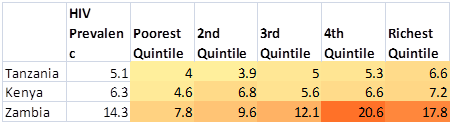
A survey was carried out in one district each in Kenya, Tanzania and Zambia to establish which factors are associated with health facility childbirth (thus shedding light on which factors are associated with the decision to give birth elsewhere, perhaps at home). Health seeking behavior is strongly associated with wealth, education, and urban residence; wealthier, better educated women living in urban areas, in general, are more likely to give birth in a health facility.

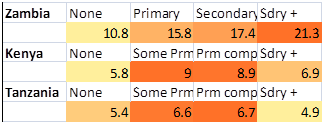
These factors are of especial interest because of their association with HIV. Wealthier, employed, better educated, urban dwelling women in African countries are often more, rather than less likely, to be infected with HIV. The tables below are for Kenya, Tanzania and Zambia, but these trends can also be found in other countries. The first table shows HIV prevalence by wealth quintile, with prevalence being lower among poorer people and higher among wealthier people.

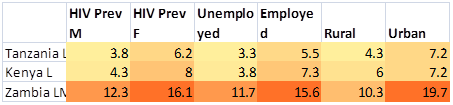
Wealth quintile tableThe next table shows HIV prevalence in males and females, by employment and by urban/rural residence. Males are far less likely to be infected than females, unemployed people are less likely to be infected than employed people and rural dwelling people are less likely to be infected than urban dwelling people.

Employment residence

The third table shows that HIV prevalence is sometimes lower among those who have less education and higher among those with primary education in Kenya and Tanzania and those with secondary education and beyond in Zambia. (Note, figures for education are for attendance, not attainment, so they don’t tell you that much. But MDG 2 is about ‘achieving universal primary education’, not about academic attainment.)

education

Receiving antenatal care at a health facility is part of the Millennium Development Goal (MDG) number 5, to improve maternal health. Therefore, it is not surprising that all 14 African countries I have looked at have a very high score for this goal, all ready for 2015. But the goal does not consider matters such as conditions in health facilities, skills of providers, facility practices, equipment, supplies, etc. So the percentage of women delivering in health facilities and the percentage of deliveries attended by a skilled health provider are far lower, being out of the MDG limelight.

ANC tableFor information on health facility conditions, equipment and supplies, there are Service Provision Assessments for each of the three countries, showing that there are many serious lapses. But questions about whether skilled providers are skilled, and of how skilled they are, are less often asked (particularly in relation to the MDGs). Another paper, entitled “Are skilled birth attendants really skilled? A measurement method, some disturbing results and a potential way forward“, addresses this issue.

Skill levels overall are not impressive and are low in some areas in the countries involved (Nicaragua, Benin, Ecuador, Jamaica and Rwanda). The researchers note that “knowledge of a procedure is no guarantee that it can be performed correctly”, but also that problems are not solely due to a lack of skills or training, that some are due to lack of equipment, supplies and other things.

The first article estimates that skilled birth attendance could substantially reduce maternal deaths “presuming that facilities meet standards of quality care.” Quite. But various sources of data show that health facilities often don’t meet standards of quality care. The possibility that health facilities may be the source of a considerable proportion of HIV infections in high prevalence countries must be considered urgently if healthcare transmitted HIV, and other diseases, are to be averted.

Reducing maternal deaths is a laudable goal, but it is nothing short of unethical to encourage women to attend health facilities where the conditions are likely to be unsafe. Right now, failing to achieve MDG 5 may even be preferable to achieving it. Of course deaths from hemorrhage, obstructed labor, puerperal sepsis and pre-eclampsia must be reduced, but not at the cost of increasing incidence of HIV, hepatitis and other bloodborne diseases.

Kenya: Needle Exchange Programs Could Save Lives


Despite the success of needle exchange and other harm reduction programs around the world, there people and institutions who still reject them. Even though injection drug use is said to contribute a relatively small proportion of HIV infections in Kenya, apparently some community and religious groups don’t always wish to support them. Perhaps they do not understand harm reduction?

Canada has been particularly open to needle exchange and other programs, and the view that “Drug users shouldn’t be given clean needles…it only encourages them” is a minority view now, thankfully. If needle exchange reduces transmission of HIV and hepatitis, it must be encouraged. While it may not cut injection drug use directly, it provides a means of reaching out to users in a meaningful way.

Persecuting durg users and suspected drug users, searching and questioning them, using possession of syringes as a reason for arresting them and confiscating their injecting equipment, do not ultimately result in a reduction in injecting drug use. Worse still, these actions result in users facing potentially more dangerous conditions, as well as increasing syringes and needle reuse.

Community and religious groups may be influenced by a hangover from the Bush era. Bush had a sort of ‘victorian’ influence; if he believed something, no matter how stupid, his supporters (sort of hard to believe he had them, but he must have) would believe the same thing. This is especially true of his supporters who were in receipt of US funding for their activities.

The contribution of prison populations to the HIV epidemic in Kenya is also said to be high. Even Canada, the US and Australia don’t have a needle exchange program in prisons, but it would be wise for Kenya to establish where infections are coming from among prisoners.

Aside from the copious innuendo about what men do in prisons, male to male sex is likely to be an issue in a country where it can land you in prison. Prisoners must face other risks, too. Injection drug use is one possibility, but also perhaps tattoos, body percing, blood oaths, traditional practices occur in prisons? Even sharing razors and other sharp objects carries some risk.

Kenya’s Modes of Transmission Survey is not a reliable means of estimating the combined contribution of several groups, such as injection drug users and prison populations. People who fall into these groups may face a high risk of being infected, yet few intervention programs are currently aimed at them.

Needle exchange programs would be a good start and may help to launch other programs, such as opioid replacement therapy, in the long run. But other programs addressing prisoners, men who have sex with men, sex workers and others could address between 20 and 30% of HIV transmission, which is a very substantial figure.

Too many African countries have been swayed by Western prudishness about sexual behavior in their approach to HIV. They have adopted some of the homophobia, xenophobia and other prejudices on which various wars on ‘terror’, ‘drugs’ and the like have been based. This has not led to rapid reductions in HIV transmission; so it’s time for a change.

The Only Certainty About Unsafe Healthcare and HIV is Ignorance About It


An article by Ndebele, Ruzario and Gutsire-Zinyama, who work for the Medical Research Council of Zimbabwe, claims to dismiss the ‘wait and wipe’ finding, which came from circumcision studies carried out in Africa. This refers to the finding that men who waited at least 10 minutes after coitus and used a dry cloth to wipe their genitals were far less likely to be infected with HIV than both circumcised and uncircumcised men who did not follow this procedure.

What is most extraordinary about this finding is that it has been feebly denied by some, but ignored by far more; in contrast, the findings about a rather weak association between circumcision and HIV transmission was used to push an extremely aggressive, well funded and loudly publicized program to circumcise as many African males, both teenagers and children, as possible.

One should no longer be surprised when researchers embrace the results they expected, while at the same time distancing themselves from those they don’t expect, and certainly don’t want. The ‘wait and wipe’ finding was presented at a conference some time back and was covered by US media. But it never received the attention, or subsequent funding, that mass male circumcision programs received.

So, seven years after those hyped mass male circumcision programs started, and a claimed several million men and boys circumcised under the programs, no further research appears to have been done into this interesting finding. Ndebele et al, who don’t seem aware that HIV prevalence in Zimbabwe is higher among circumcised men, rebuke several commentators, including myself, for suggesting that ‘wait and wipe’ could become an alternative strategy to circumcision.

What I said was that appropriate penile hygiene is a lot simpler, cheaper, safer and less invasive than mass male circumcision. The circumcision enthusiasts have encouraged people to associate circumcision with hygiene, but they have never shown that HIV transmission has anything to do with penile (or vaginal) hygiene. It simply suits their purposes that people seem ready to believe in such a connection.

So how can Ndebele et al question the findings about penile hygiene without also questioning those about mass male circumcision? And how can they not call for further research to be carried out? They accuse myself and other commentators of engaging in ‘pure speculation’, which we do engage in. But we are not the ones who collected the original data, some of which we now wish to selectively dismiss, and the rest of which we wish to use to aggressively promote circumcision programs.

So they proceed to engage in pure speculation of their own, and they seem to believe they are ‘dismissing’ arguments about the possible role of unsafe healthcare with a rhetorical question: they ask “With all the campaigns on safe needles that have been going on, where on earth can one still find health professionals using unsafe needles?” The answer is that syringe reuse is likely to occur in every high HIV prevalence African country.

Merely running a campaign about unsafe healthcare and syringe reuse does not reveal the extent of HIV transmission through these routes. Nor does running a campaign ensure that unsafe healthcare simply ceases to be an issue after a few years. No number of strategies, position papers, frameworks, roadmaps, multi-page reports, toolboxes or other pen-pushing exercises so beloved by the HIV industry will tell us the extent of non-sexual transmission of HIV through unsafe healthcare.

Nor will ‘putting unsafe healthcare on the agenda’ (no matter for how long) ensure that any meaningful changes will come about. Most people know little about non-sexually transmitted HIV and are constantly told that 80% of transmission or higher in Africa is a result of unsafe sex. Researchers rarely even mention HIV transmitted through unsafe healthcare, except to dismiss it, without evidence.

The authors argue that the results they wish to embrace are correct and that the results they wish to deny are merely a “coincidental finding”, and conclude that “there is no need to conduct further research” into the ‘wait and wipe’ finding.

This just about sums up the HIV industry’s approach to mass male circumcision. This has been a process of scrabbling about for data, any data which appears to support the program, and denying or ignoring any data which shows the program to be a hoax; all cobbled together by greedy (and probably somewhat pathological) ‘experts’, who will do anything to promote circumcision, ably supported by an institutionally racist HIV industry.

HIV Risks For Women Who Have Sex With Women


Given the flaws in UNAIDS’ Modes of Transmission model, the bulk of HIV transmissions in African countries are unexplained. They are not almost all, as UNAIDS claims, a result of heterosexual sex. Many must result from other modes of transmission, but UNAIDS has failed to take the necessary steps to investigate non-sexual transmission, through unsafe healthcare, cosmetic or traditional practices.

Another possible set of unexplained transmissions comes from research into women who have sex with women (WSW). A paper by Sandfort et al finds that “based on the available data [they] could not identify a transmission route for 13 of the infected women”, about a third of all infected women. The authors do admit that they “cannot rule out that these women were infected at birth or through medical procedures”, but they didn’t collect data that would allow them to rule out infection through medical procedures, for some reason.

A paper by Matebeni et al note that there are “some cultural practices in Southern Africa [which] render women’s bodies vulnerable and thus contribute to the spread HIV and AIDS” but they don’t say which ones, perhaps they are referring to female genital mutilation. This paper also mentions the possibility of expusure to medical transmissions, but they don’t make it clear what kind they are referring to.

Both papers give credence to the possibility that some of the women were infected with HIV through sex with their female partners. But if they haven’t tested the female sexual partners of the women they found to be HIV positive, we are as much in the dark about the risks of transmission through sex between women, particularly women who have sex exclusively with other women.

Both papers conclude that further research is needed and the authors are to be applauded for starting to address this highly sensitive subject. But it is to be hoped that they will consider non-sexual transmission if they do further research. Contact tracing would need to include, not just sexual contacts, but also contacts where the HIV positive person could have come into contact with someone else’s blood, such as various healthcare, cosmetic or traditional procedures.